What to Expect on a Historic Savannah Walking Tour
What to Expect on a Historic Savannah Walking Tour
If you're planning your first visit to Savannah, you may be wondering what a historic walking tour is actually like. How much walking is involved? How long does it last? What will you see? Is there time to ask questions? And is a walking tour a good choice if you don't want to spend several hours walking in the heat?
The History of Savannah Walking Tour is designed to answer those questions while giving you a deeper understanding of Savannah's Historic District.
Led by local guide Sarah, the 90-minute small-group tour combines Savannah history, architecture, historic squares, and the stories of the people who shaped the city. The pace is relaxed, with frequent stops for storytelling, questions, and opportunities to take in your surroundings.
What to Expect at a Glance
Duration: Approximately 90 minutes
Distance: About 1 1/2 miles
Group size: Small groups, with up to 15 guests
Meeting point: Chippewa Square
End point: Forsyth Park
Schedule: Tuesday through Saturday at 10 AM
Pace: Relaxed, with frequent stops
Focus: Savannah history, architecture, historic squares, and the people and events that shaped the city
Guide: Sarah, with more than 8 years of experience leading Savannah walking tours
How Much Walking Is Involved?
The History of Savannah Walking Tour covers approximately 1 1/2 miles over 90 minutes.
That doesn't mean walking continuously for an hour and a half. The tour alternates between relatively short walks and stops where we talk about Savannah's history, architecture, people, and historic places.
The pace is intentionally relaxed, with frequent stops and opportunities to listen, ask questions, and take a break in the shade.
Comfortable walking shoes are recommended, and it's a good idea to bring water, especially during Savannah's warmer months.
If you're concerned about the amount of walking involved, you can also read our guide to whether a Savannah walking tour is too much walking.
What Will You Learn About Savannah?
A historic walking tour should do more than point out beautiful buildings. It should help you understand why Savannah looks the way it does and how the city developed over time.
Savannah was founded in 1733, and its original planned layout still shapes the Historic District today. As we walk, we explore the connections between the city's squares, architecture, landmarks, and history.
Depending on the route and stops, you may learn about subjects including:
Savannah's founding and the role of James Oglethorpe
The city's historic squares and the original city plan
Tomochichi and the Native American history connected to Savannah's founding
The lives and labor of enslaved people in antebellum Savannah
Savannah's churches and immigrant communities
The Revolutionary War and people connected to the conflict
The Civil War and its impact on Savannah
Historic homes and Savannah's distinctive architecture
The people whose lives helped shape the city
The goal isn't to overwhelm you with dates and names. It's to give you enough historical context that the buildings, squares, monuments, and streets you encounter during the rest of your visit make more sense.
A Walking Tour Is More Than Seeing the Sights
One of the advantages of taking a guided walking tour is being able to ask questions while you're actually standing in the places you're learning about.
If something catches your attention, ask about it.
If you've heard a story about Savannah and aren't sure whether it's true, ask.
If you're curious about a building, monument, square, or person, there's an opportunity to explore that question.
That's one reason I keep my tours small and conversational. A walking tour doesn't have to feel like listening to a lecture while following someone down the street. It can be a conversation about the city you're visiting.
What Historic Places Will You See?
The tour moves through Savannah's Historic District and includes a variety of historic squares, buildings, monuments, and streets.
Some of the places and subjects you may encounter include:
Chippewa Square
We begin in Chippewa Square, where you'll get an introduction to Savannah's founding and the city's original planned layout.
Wright Square
Wright Square provides an opportunity to discuss Tomochichi and the Native American history surrounding Savannah's early years.
Owens-Thomas House & Slave Quarters
Savannah's beautiful historic architecture also has a complicated history. The Owens-Thomas House provides important context about slavery, wealth, domestic life, and the people whose labor helped sustain the city's antebellum households.
Colonial Park Cemetery
This historic cemetery offers another perspective on Savannah's past, including the lives and deaths of people who lived in the city during its earlier periods.
Cathedral of St. John the Baptist
Savannah's religious and immigrant history is visible in its architecture, including the Cathedral and the city's historic Catholic community.
Green-Meldrim House
The Green-Meldrim House connects Savannah to the Civil War era and the events that affected the city during the conflict.
Jones Street and Monterey Square
These areas provide opportunities to look more closely at Savannah's historic architecture and the people and events associated with some of the city's most recognizable streets and squares.
Forsyth Park
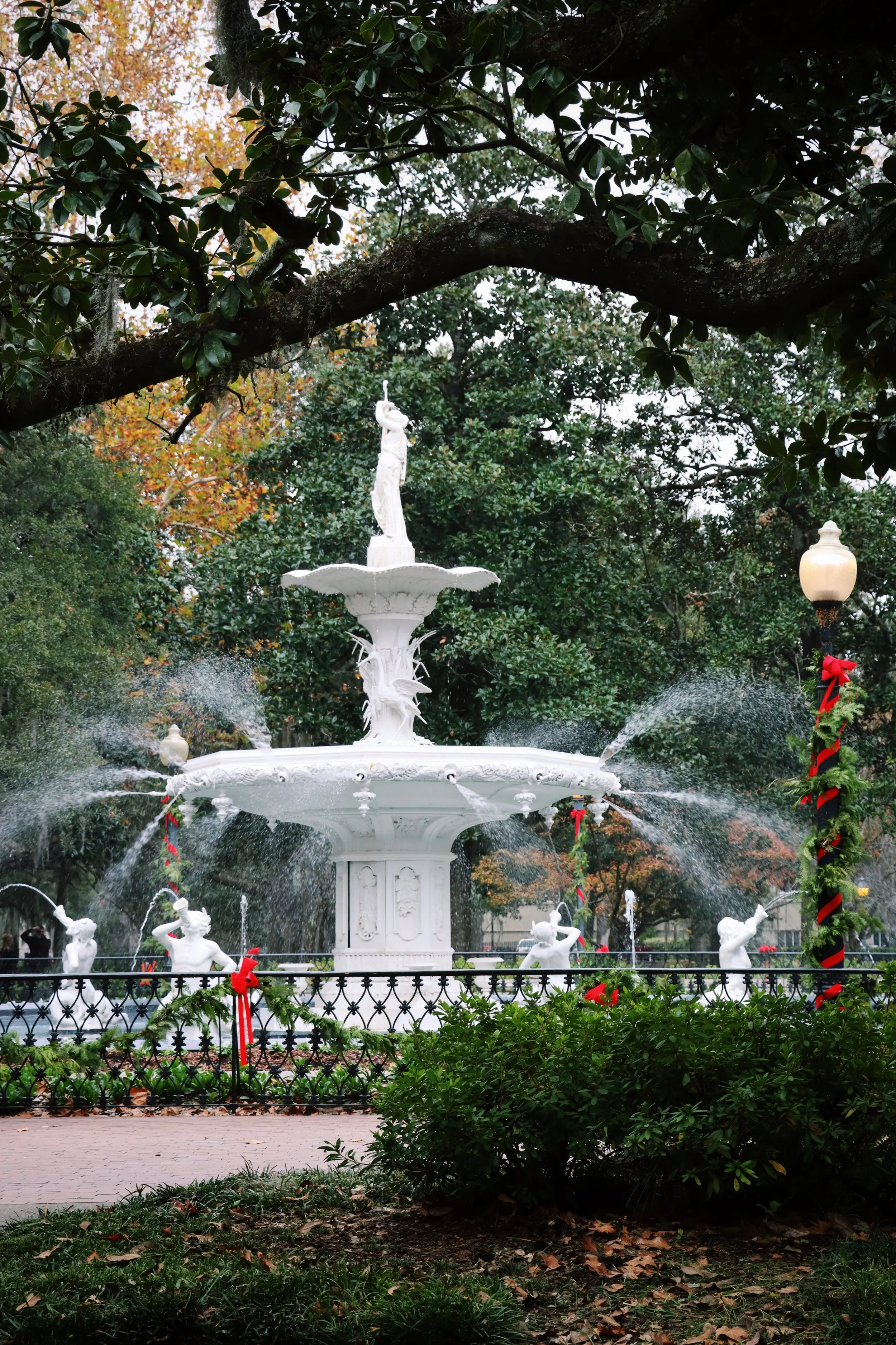
The tour concludes near Forsyth Park, one of Savannah's best-known public spaces.
The purpose of seeing these places isn't simply to check landmarks off a list. It's to understand how they fit together as part of Savannah's larger history.
Is the Tour Mostly History or Ghost Stories?
Savannah is famous for its ghost stories, but the History of Savannah Walking Tour is a historical walking tour focused on documented history, rather than a ghost or paranormal tour.
If you're interested in Savannah's founding, architecture, historic squares, the people who lived here, and the events that shaped the city, this is the focus of the experience.
Is the Tour Good for First-Time Visitors?
Yes. A walking tour can be particularly useful early in a Savannah visit because it gives you a sense of the Historic District's layout while providing historical context for the places you'll encounter during the rest of your trip.
After the tour, you'll have a better understanding of how Savannah's squares, streets, architecture, and landmarks fit together.
You may also discover places you'd like to return to later, whether that's a historic building, a square, a cemetery, a church, or a neighborhood restaurant.
Is the Tour Wheelchair and Stroller Accessible?
The tour is generally wheelchair and stroller accessible, and much of the route is relatively flat.
However, Savannah is a historic city, and historic sidewalks and streets can include uneven pavement and other surfaces that may be challenging for some mobility devices.
If accessibility is an important consideration for your visit, you're welcome to contact us before booking so we can discuss the route and any specific concerns.
Who Is This Savannah Walking Tour Best Suited For?
The tour is a good fit for visitors who:
Enjoy history and storytelling
Are visiting Savannah for the first time
Want to understand the Historic District rather than simply see it
Prefer a small-group experience
Like having opportunities to ask questions
Prefer a relaxed pace rather than a rushed itinerary
Want historical context for Savannah's architecture and landmarks
Would rather explore on foot than experience the city entirely from a vehicle
It can be especially rewarding for travelers who want to understand the story behind the scenery.
If you're primarily looking for a paranormal experience, a private sightseeing experience, or a tour that involves little or no walking, a different type of Savannah tour may be a better fit.
What Should You Bring?
For a comfortable Savannah walking tour, I recommend bringing:
Comfortable walking shoes
Water
Sunscreen
A hat or other sun protection during warmer months
Weather-appropriate clothing
Savannah can be hot and humid, particularly during the summer, so planning for the weather makes a noticeable difference.
The tour takes place rain or shine in ordinary weather. If severe weather makes the tour unsafe, we'll provide information about rescheduling or other available options.
A Note From Your Guide, Sarah
I've been leading walking tours in Savannah for more than eight years, and one of my favorite parts of the job is watching visitors make connections between the places they're seeing and the history behind them.
Savannah has an extraordinary amount of history packed into a relatively walkable area. But you don't need to memorize a long list of dates to appreciate it.
My goal is to tell the stories clearly, provide the context you need, and leave plenty of room for questions and conversation.
That's why I keep the experience small and relaxed. I want you to leave not only knowing more about Savannah, but also understanding the city a little better.
How Long Is the History of Savannah Walking Tour?
The tour lasts approximately 90 minutes and covers about 1 1/2 miles through Savannah's Historic District.
Tours currently meet Tuesday through Saturday at 10 AM in Chippewa Square and finish near Forsyth Park.
Ready to Explore Savannah's History?
If you'd like to see Savannah's Historic District while learning about the people, places, architecture, and events that shaped the city, join us for a relaxed, small-group walking tour.
Book the 90-Minute Historic Savannah Walking Tour
And if you're still planning your Savannah itinerary, you may also want to read: